The habit no one mentions at a check-up.
The Sleeping Habit Parents Call Cute—and What It Looks Like at Sixteen

For nineteen years I've treated children who breathe through their mouths at night, and adults with snoring and sleep apnea. What connects those two groups is something I wish I'd understood much sooner. I'm writing this because you deserve to know about it while your child is still young enough for it to matter.
I need you to read this carefully. All of it.
I've spent nineteen years treating children's breathing and sleep. More than 2,400 children have come through my practice. And I can tell you right now, I already know what you think about this. Because I've heard it from a thousand parents.
"She sleeps like a log." "He's out the second his head hits the pillow." "It's adorable, honestly."
Mouth hanging open. Head sunk into the pillow. Jaw dropped. It looks harmless. It even looks peaceful.
They snore a little, or their breathing sounds heavy and wet. Your partner says they sound just like him, and he's fine.
And if you've ever mentioned it to the pediatrician, you were told they'd grow out of it. Eventually, you stopped asking.
I know. I've heard it all. And I need you to understand something critical:
This is not a phase. It will not resolve on its own. It will get worse, and it is more serious than you've been told.
Why I'm Asking You to Take This Seriously
I don't often write articles like this. But I worry about the children whose parents will never walk into my clinic.
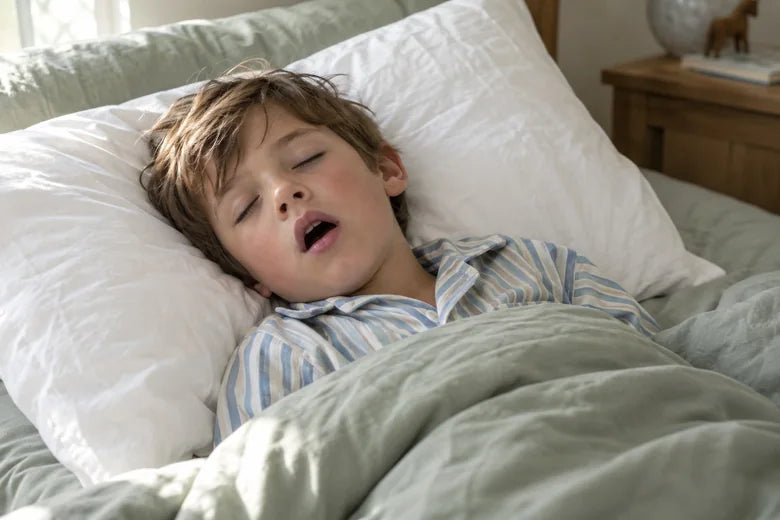
Think about the child in the photograph at the top of this page. Does that sleeping position look familiar?
Here's what most parents haven't been told: an open mouth during sleep isn't simply a habit, and the concern goes beyond breathing.
Look at the position of the child's head. The chin has dropped toward the chest, narrowing the throat. The mouth opens as the body does the only thing it can to get air, leaving the jaw pulled back out of position.
Now think about how long they stay that way. Eleven hours a night. Every night. During the years when their face and throat are changing fastest.
A few nights wouldn't matter. Years do. Their jaw is held in that position while the bones of the face and the muscles of the throat are still being shaped.
Here's what that means for the child:


Their airway keeps partly closing.
From the doorway it doesn't look like anything. A little snoring, or just the sound of a child breathing through their mouth. But with the chin dropped, the throat is narrower than it should be, and all night the body keeps working to pull air through it. Sleep that should be deep stays shallow. They're in bed for eleven hours and wake up as if they'd had six.

Their brain pays for it the next day.
You see it at breakfast before anyone else does. The slow start. The shadows under the eyes on a child who went to bed at seven. By mid-afternoon the patience is gone. At school it looks like daydreaming, fidgeting, a child who can't quite stay with the lesson. Nobody connects it to the night, so it gets a different name: a phase, a personality, and eventually a word like ADHD.

It shapes how their jaw and face develop.
A child's face is still being shaped, and bone grows toward wherever it's held. A chin that spends every night folded down and back is being told, night after night, where to grow. Over the years the lower face lengthens a little, the lips stop meeting at rest, and the chin settles behind the lip line. It happens so slowly that the people who see the child every day don't notice. A photograph from two years ago does.

It only gets worse as they grow up. And harder, and more expensive, to treat.
This is what it looks like at nineteen. The lips still rest apart. The chin sits back. He breathes through his mouth without knowing it and wakes up tired without knowing why. He's stopped letting anyone photograph him from the side. Nobody told his parents there was anything to fix, and now there's much less that can be.
I've seen too many parents wait because nothing about it looked like a problem. By the time they understood what was happening, their child's face had finished growing.
That's why I'm telling you now, while there's still time. Please don't wait until the consequences make the problem impossible to ignore.
What Happens If You Keep Ignoring This

I hesitated before including this section. It is uncomfortable to read. But too many adults have sat across from me asking, "Why didn't anyone warn me or my parents while there was still time?"
So I'm telling you now.
Ages 3 to 6The "Nothing to Worry About" Phase
Their mouth is open in every sleeping photograph. The pillowcase is damp. There's a little snoring. You think nothing of it.
Meanwhile, their chin is tucked back for eleven hours a night and their throat is partly closed. They're tired more often than other children, but you put it down to their age.
Ages 7 to 9The Classroom Phase
The shadows under their eyes are there every morning now, no matter how early they went to bed. Afternoons are difficult. A teacher mentions trouble focusing. Someone raises ADHD. The pediatrician still says they'll grow out of it.
Their face is beginning to lengthen, but the change is so gradual that the people who see them every day don't notice.
Ages 12 to 16The Mirror Phase
Picture the teenager who has started worrying about their profile. At first, they turn their head when you lift your phone. Then they ask you to delete the photograph.
You tell them they look lovely. You mean it. But they still don't want you to keep it.
That is the part that makes me angry. A child should be in the photograph, enjoying the moment—not checking the angle of their face before they let anyone see it.
They notice the side profile: a chin that sits back, lips that rest apart. You notice the photographs disappearing. The tired mornings and disrupted nights deserve attention too.
I don't want a parent finding out that persistent symptoms deserved attention only after their child has started asking why nobody helped them sooner.
Age 25 and BeyondThe Adults I Treat
Sleep and breathing problems don't end with childhood. In adulthood they turn into sleep apnea, a sleep study, and debilitating chronic snoring that wears down the person beside them. A child's symptoms deserve attention long before that.
These are people I treat. Good people whose parents were told not to worry.
At five it's a damp pillowcase. At nine it's a note from the teacher. At sixteen it's a profile they turn away from the camera. At thirty-five it's a sleep study, a CPAP mask every night, and a partner in another room.
What angers me is how easily years can pass when a family doesn't know what to look for. The child cannot arrange an assessment or question the advice they've been given. Their families need this information early. That is why I'm writing this now.
You are reading this while there is still time to act. Please don't waste it.
Why It Can Go Unnoticed
Your pediatrician sees your child awake. They don’t see the mouth hanging open at midnight, hear the snoring through the bedroom door, or watch the restless turning between positions.
Unless those details come into the appointment, an important part of your child’s health can stay out of sight.
At home, the signs can become familiar. The snoring is just how he sleeps. The tired mornings are just how he wakes up. You stop mentioning something you hear every night.
But getting used to it doesn’t mean it has gone away.
You don’t need to wait for breathing pauses, constant exhaustion or school difficulties before raising the concern. Regular snoring and difficulty breathing during sleep already deserve attention.
Your child should not have to struggle more before what you’re noticing is taken seriously.
Look at What’s Supporting Their Head.
Children don’t stay in the position you tucked them into.
He starts on his back. If the pillow sits too high, it lifts his head and brings his chin toward his chest.
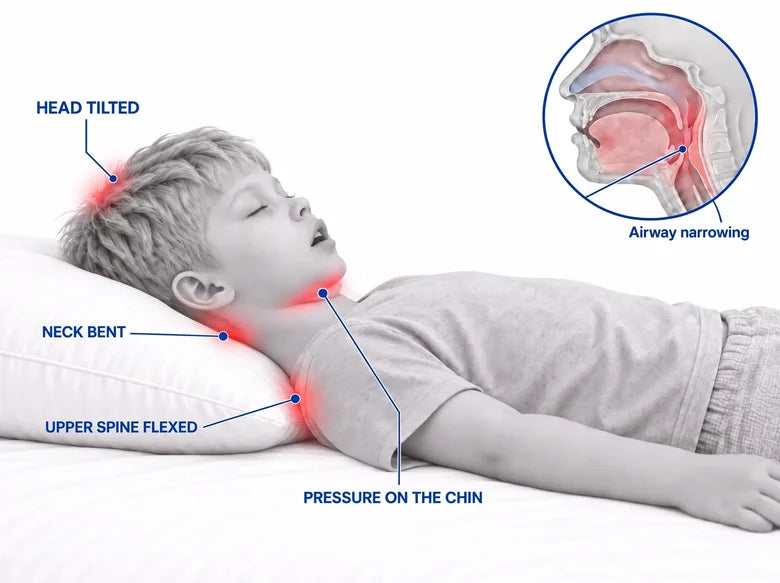
Then he rolls onto his side. His weight moves onto a different part of the pillow. Soft filling can shift or compress beneath him, letting his head sink while his neck loses support.
He turns again. The pillow bunches under one side or slips away from the other.
Every change of position changes what is supporting his head.
That is why softness alone isn’t enough. A pillow needs the right height and shape for your child—and support that allows him to move between sleeping positions.
Why I Started Looking More Closely
For most of my career I treated two groups of patients: children who breathed through their mouths at night, and adults with snoring and sleep apnea. For a long time I thought of them as separate problems.
Then an adult patient said something while I was fitting his appliance.
“My mum says I drooled through every pillow in the house. My brother wouldn’t share a room with me because of the snoring. I was seven.”
I’d heard similar stories before. But this time, I thought about the children coming into my practice with the same nighttime signs: snoring, an open mouth, a damp pillow.
I wanted to understand how long those signs had been there—and what, if anything, had been done about them.
Children Move. Their Pillow Needs to Allow for That.
I wanted an answer to a practical question: how do you support a child’s head and neck when they keep changing position through the night?
So I look at three things.
Does it keep the head, neck and back aligned?
Without pushing the head too high or letting it sink too low.
Does it come in different heights?
A three-year-old and a nine-year-old have different necks and shoulders. One height cannot fit both.
Does the support stay when they move?
Children turn over. Support that only works in one spot isn’t enough.
That is why Stillnight’s design caught my attention.
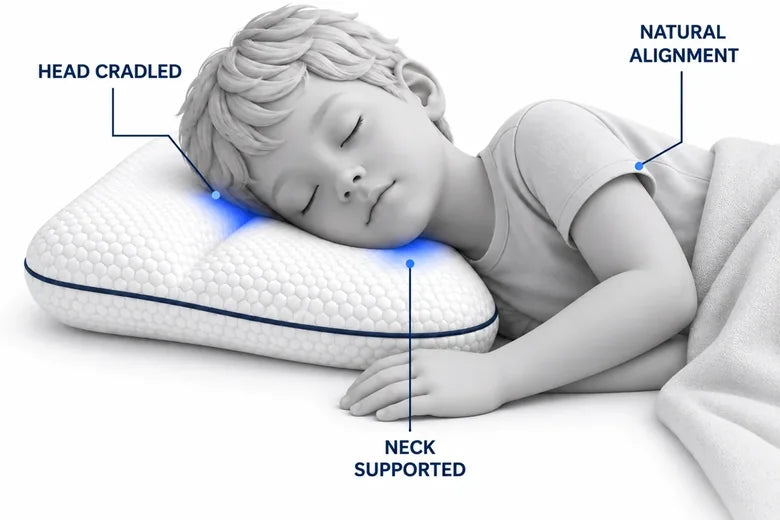
Built Around the Way Children Actually Sleep.
Stillnight starts by accepting that children change position. They settle on their back, turn onto their side and end up across the bed. The design starts with those movements, rather than one ideal position they are supposed to hold.
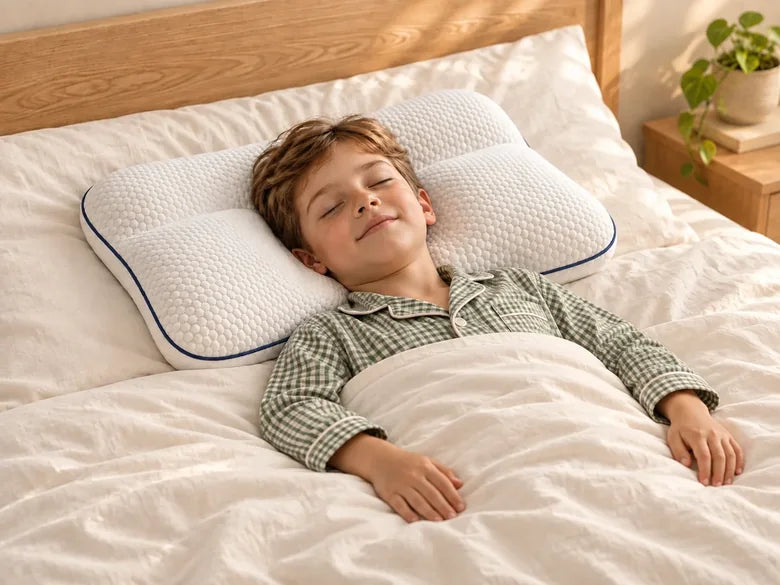
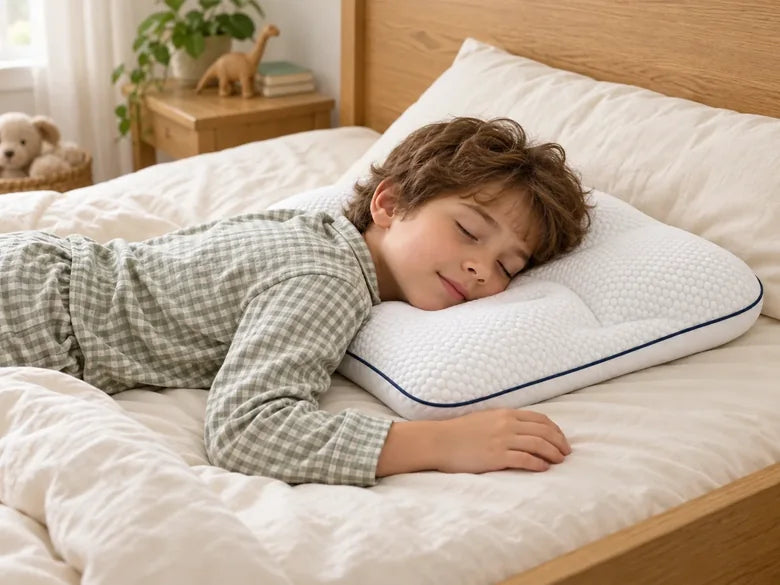
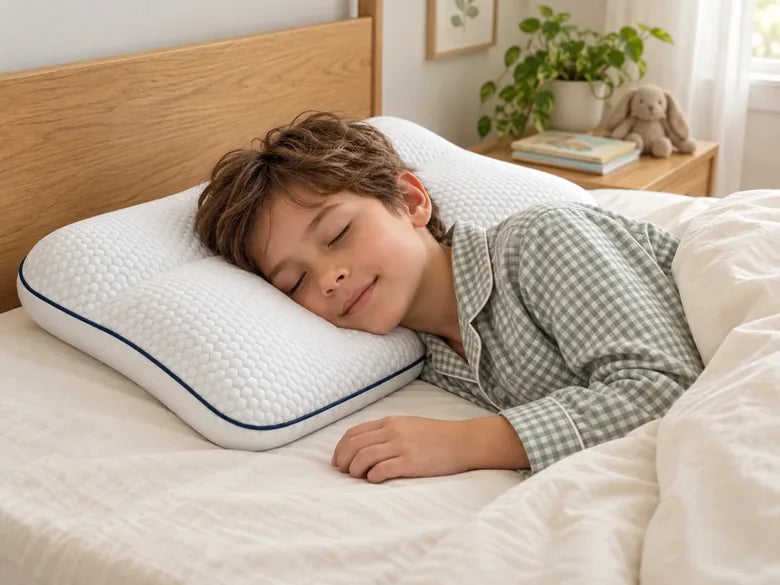
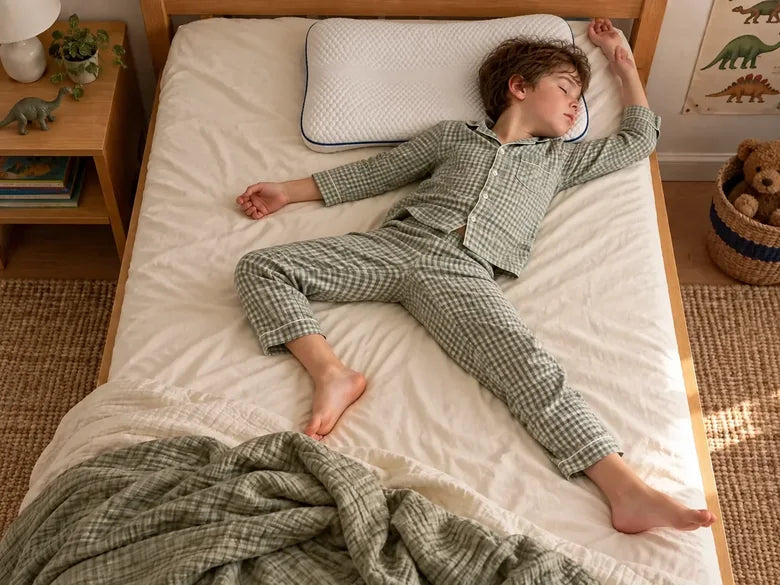
The pillow is shaped around the child’s movement—not the other way around.
Its lower centre gives the head somewhere to settle. The shaped edges support the neck and leave room to turn between back and side sleeping. The 15° contour brings those features together.
Then comes the fit. A shape designed for children still needs to account for how much they grow. That is why Stillnight comes in three heights: ages 1–3, 3–8 and 8–18.
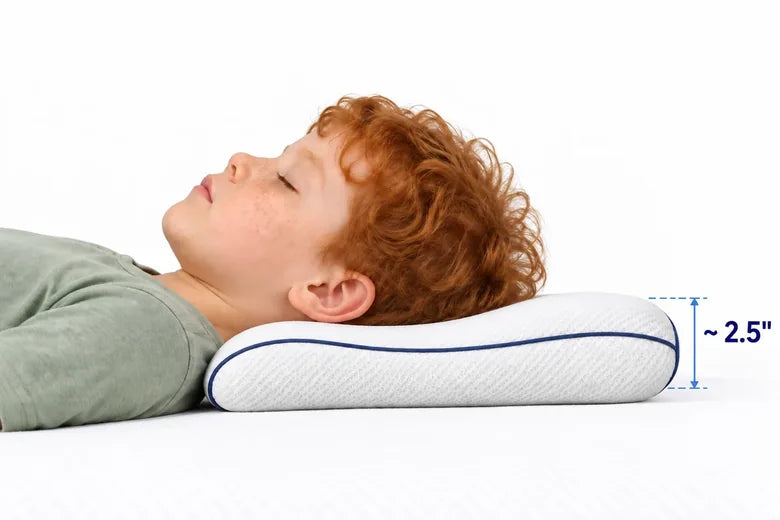
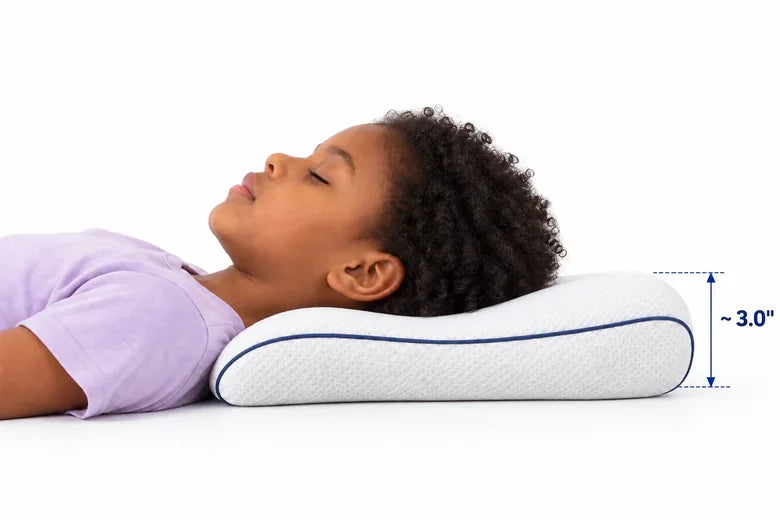
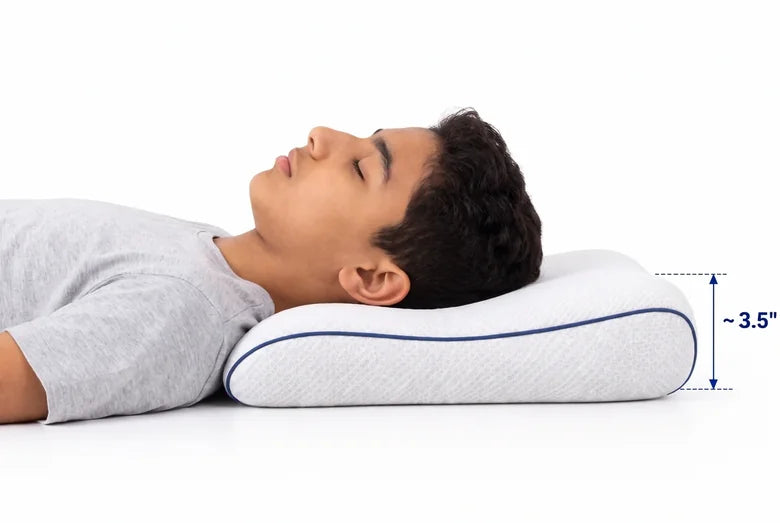
The aim is simple: support that fits their size, with room to settle into their own way of sleeping.
I’ve partnered with Stillnight to offer my readers 50% off, plus free pillowcases with every bundle.
I'll Be Direct With You
The cycle is easy to fall into. You hear the snoring. You notice the tired mornings. Then another ordinary day takes over, and you put it off again.
Meanwhile, your child has another night to get through.
They should not have to get older and find the words to ask for help before someone pays attention.
Look at the pillow they're using tonight. Is it sized for them? Does it hold their head level and their chin forward while leaving them room to turn?
That is what Stillnight is built around: three age-based heights and a contour that keeps the chin from folding toward the chest.
I can't make this decision for you. But I've seen what happens when it gets put off for one more year, then two, then five. The face finishes growing around a position that could have been changed for the price of a pillow.
Please don't wait. Not next week. Tonight.
Thirty Nights to Try It at Home.
Stillnight’s 30-night trial gives your family time to try the pillow at home and decide whether it is right for your child.
You have thirty full nights to test it.
Not seven. Not fourteen. Thirty. Your child needs a few nights to settle into a new pillow, and you need enough mornings to see the pattern change.
If, after thirty nights, the pillowcase is still wet in the morning, their mouth is still open when you look in, or the breathing you hear from the hallway hasn't gone quiet, send it back.
Full refund. No questions.
So let me be clear: the only risk here is doing nothing.
The Adult Your Child Will Become
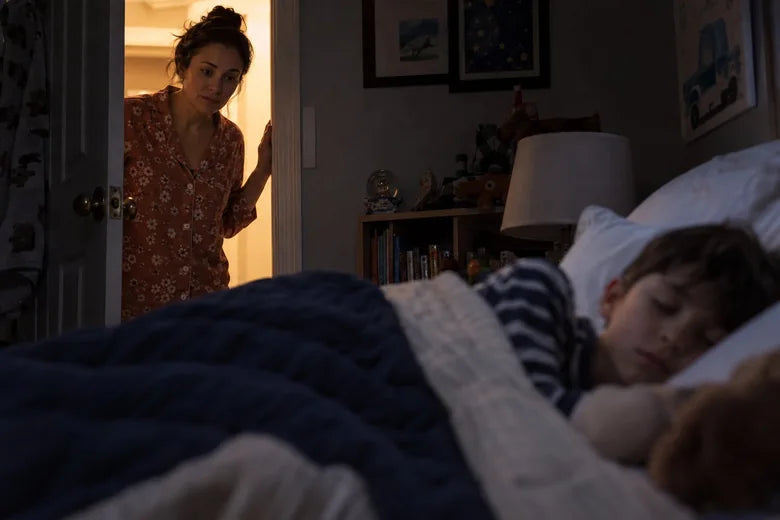
One day, the child asleep in that room will be old enough to look back on these years.
I meet that adult often. Kind, tired people who spent years learning to live with broken sleep, and with a face they would rather not be photographed from the side. The question they ask me is always the same: "Why didn't anyone catch this when I was small?"
I don't want that to be your child's question.
At six, they can't explain what a night of broken sleep is doing to their day. They just know they're tired. They don't know which questions to ask or who can help.
They rely on us to notice. And noticing has to lead to something.
When parents come back to me a few weeks after changing the pillow, the first thing they say isn't "The pillowcase is dry." It's "I looked in and her mouth was closed." Or "He looks like a different kid in the morning." Or "I didn't know he could sleep quietly."
They should not have to spend years finding ways to cope before an adult asks what needs to change.
Start tonight.
What To Expect In Your First 30 Nights
I asked the families using it, parents and children alike, what changed and when it changed. This is what they reported.
Night 1 to 7The snoring quiets.
The parents noticed this one first, usually from the doorway.
Night 8 to 14The mouth stays closed.
Look in before you go to bed. The pillowcase is dry in the morning.
Night 15 to 30+Back to themselves.
Easier mornings, steadier afternoons, and parents told me they had stopped checking.
Questions Parents Ask Me Every Day
Isn't it normal for kids to sleep with their mouth open?
It's common. That isn't the same as normal. Between one child in nine and one in two does it, depending on how it's counted. The medical literature describes it as "commonly overlooked and inconsistently diagnosed." It's so common that nobody flags it.
My pediatrician said it's not something to worry about for now.
Some children do stop breathing through their mouth on their own. What doesn't undo itself is the shape their face took while it was growing around that position. A check-up happens while your child is awake and upright, which is the one time of day none of this shows. Tell them what you hear at night, and in the meantime change what your child's head is resting on.
Won't any firmer pillow do the same thing?
A firmer adult pillow is still the wrong height for a child's neck, so the chin still drops. The fifteen-degree slope and the height are the mechanism, and the height has to match their age.
My child moves all night. Will it matter?
Children roll. The contour holds the head level on their side as well as their back. The height keeps the chin from folding, whichever way they end up.
Is it too late? My child is already nine.
Later is worth less than earlier, but it isn't nothing. The jaw keeps growing into the mid-teens, so there are still years in which position counts. The window narrows every year; it doesn't shut on a birthday.
Is it safe?
It's a pillow. Nothing on their face, nothing in their mouth, nothing that plugs in. The foam is hypoallergenic and OEKO-TEX® certified, with no formaldehyde, heavy metals or BPA, and the cover comes off and goes in the machine. Pillows are recommended from around eighteen months, which is why the smallest size starts there.
How will I know it's working?
Three things, and you don't need a sleep study for any of them. The damp patch on the pillowcase gets smaller, then stops. Look in before you go to bed and see whether the mouth is closed. And stand at the door: not whether they snore, but whether you can hear them breathe at all.